

The Art of Show Jumping Course Design: Timing, Pace, and Height
Have you ever stood at the edge of a show jumping course, heart pounding as you watched horse and rider sail over towering obstacles? This thrilling spectacle is not just a test of athleticism. It's a masterpiece of design where timing, pace, and height merge to create an arena where only the best prevail
Behind every soaring jump and breathless turn lies the craft of show jumping course design, an art that shapes champions. The intricacies of this design dictate not just the rhythm of hooves but the very pulse of the sport. It's here, in the delicate balance of challenge and skill, that we witness the true essence of equestrian excellence.
Read on to discover how the clever orchestration of these elements takes the ordinary to the extraordinary by transforming every course into a stage for equestrian greatness.
Timing: The Heartbeat of the Show Jumping Course
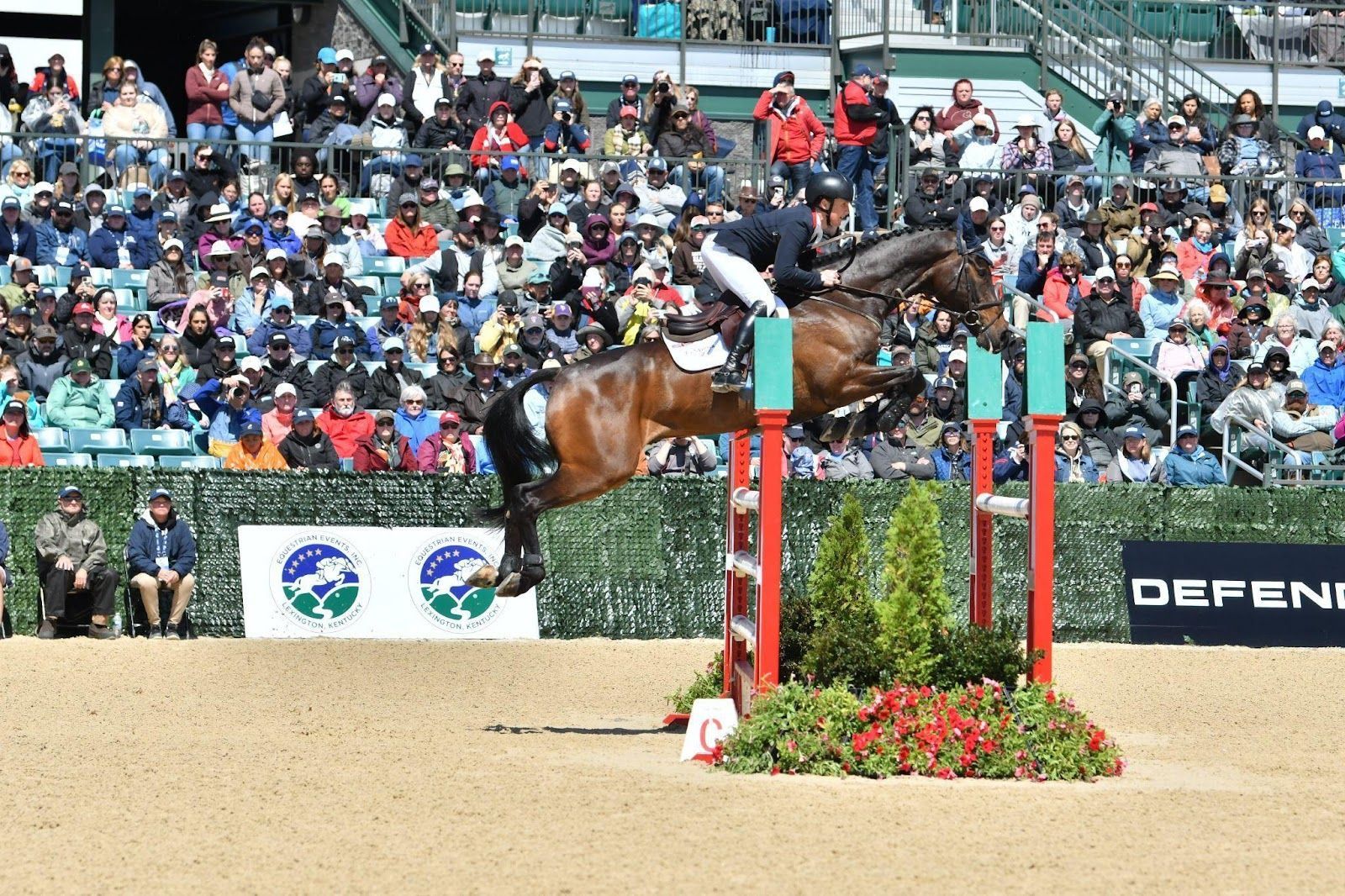
Timing in show jumping courses is a critical element that presents unique challenges to competitors. It's not just about clearing the jumps but also about completing the course within a set timeframe. This introduces a strategic layer to the competition, as riders must balance speed with precision.
For instance, open courses are designed to emphasize the athleticism and speed of horses. They feature long straight lines and wide turns for high-speed galloping between jumps. These courses demand excellent control and balance from the riders while maintaining a brisk pace.
On the other hand, indoor courses have tight turns and short distances between jumps. They require riders to demonstrate exceptional control and accuracy, as there is little room for error.
Grand Prix courses represent the pinnacle of show jumping challenges. Combining technical challenges, open galloping stretches, and large, imposing jumps, they test the skills and abilities of the world's best riders and horses.
These courses incorporate a series of demanding combinations and long galloping stretches. They conclude with massive verticals or oxers to push horses and riders to their limits.
Pace: Balancing Speed and Precision
In show jumping, pace is a vital component that balances speed with precision. A crucial aspect of mastering pace is understanding the importance of riding from center to center of each jump. This approach ensures that the horse squares his body to the fence to allow for a balanced and powerful jump. Deviating from this line can lead to more rails down, as it disrupts the horse's ability to jump in its best possible form.
Course designers typically base the distances on a standard 12-foot stride and factor in around 6 feet each for takeoff and landing.
This standardization helps riders predict the number of strides required in each line of a course and allows them to adjust their pace accordingly. However, several variables can influence how each distance rides, including the type of fence, arena size, and lighting. These changes necessitate a flexible approach to pace and stride length.
Ultimately, the rider's goal is to adjust their canter, not their line, to accommodate the distances set by the course designer. This approach allows for the maintenance of rhythm and straightness, essential for a clean round.
Height: The Vertical Challenge
Jump height in show jumping presents a significant challenge. It tests the skill and agility of both horse and rider.
The course designer's plan reflects careful consideration of how different horses will handle various obstacles. It takes into account factors like stride length and jumping ability.
For instance, when two fences are placed in a row, the course designer might set a specific stride requirement between them, challenging riders to adjust their approach accordingly. This could mean riding five strides for one competitor and six for another, depending on their horse's stride. The designer's intent is often to test the rider's ability to make decisions and adjust their pace in real time.
The placement of certain combinations on the course is also strategically chosen. For instance, a scopey distance between two oxers wouldn't be used in a tight corner, as horses need more galloping power to approach such a challenge effectively.
Design Philosophy and Trends in Modern Show Jumping
Show jumping courses have evolved significantly, reflecting the growth and sophistication of the sport. Here are some key trends and philosophies in contemporary show jumping course design:
Diverse Course Layouts
Recent designs showcase a variety of layouts to challenge competitors. Open courses, for example, feature long straight lines and wide turns to enable high-speed galloping between jumps. This design tests the control and balance of riders while maintaining a fast pace.
On the other hand, indoor courses are more compact and demanding, with tight turns and short distances between jumps that require precision and accuracy from riders.
Evolution in Technique and Material
Course designers have moved beyond the traditional 12-foot stride multiples. They've introduced more complex color schemes and lighter materials. This shift requires ultra-careful and brave horses, as the slightest touch can result in a rail down.
A Legacy of Equestrian Excellence
The next chapter in equestrian history could be written with you as a witness. Don't miss your chance to experience this exhilarating blend of sport and spectacle.
Secure your tickets now for the Defender Kentucky Three-Day Event and be part of the legacy.